
Challenge

New hires take 12–18 months to reach full proficiency.

In aerospace & defense, the ramp from hire to unassisted task performance is measured in quarters, not weeks. AmpUp compresses that timeline through structured simulation and continuous assessment.

How do you reduce ramp time for new aerospace hires?

Ramp time shrinks when competency gaps are identified early, not when more training hours are added. AmpUp Insights baselines each new hire against your actual procedures and standards in week one, builds procedural fluency through structured simulation before supervised task performance, and verifies competency continuously so you know exactly when someone is ready for unassisted work.

In deployments across technical aerospace teams, this approach has reduced the gap between hire and unassisted task performance by an average of 30 percent, with documentation to support each readiness decision.

The ramp problem is a competency problem, not a training problem.

Your new hires complete onboarding. They pass the required courses. They receive their certifications. And then they spend the next 12–18 months learning how to actually do the job — shadowing experienced technicians, making supervised mistakes, and slowly building the procedural fluency that training was supposed to provide.

The gap is not in training volume. It is in the distance between what training teaches and what the job requires. Classroom instruction covers regulations and theory. The hangar floor requires procedural memory, contextual judgment, and the ability to perform under time pressure.

AmpUp closes that gap by moving competency verification earlier in the ramp cycle — continuous assessment against your actual procedures, not generic courseware.
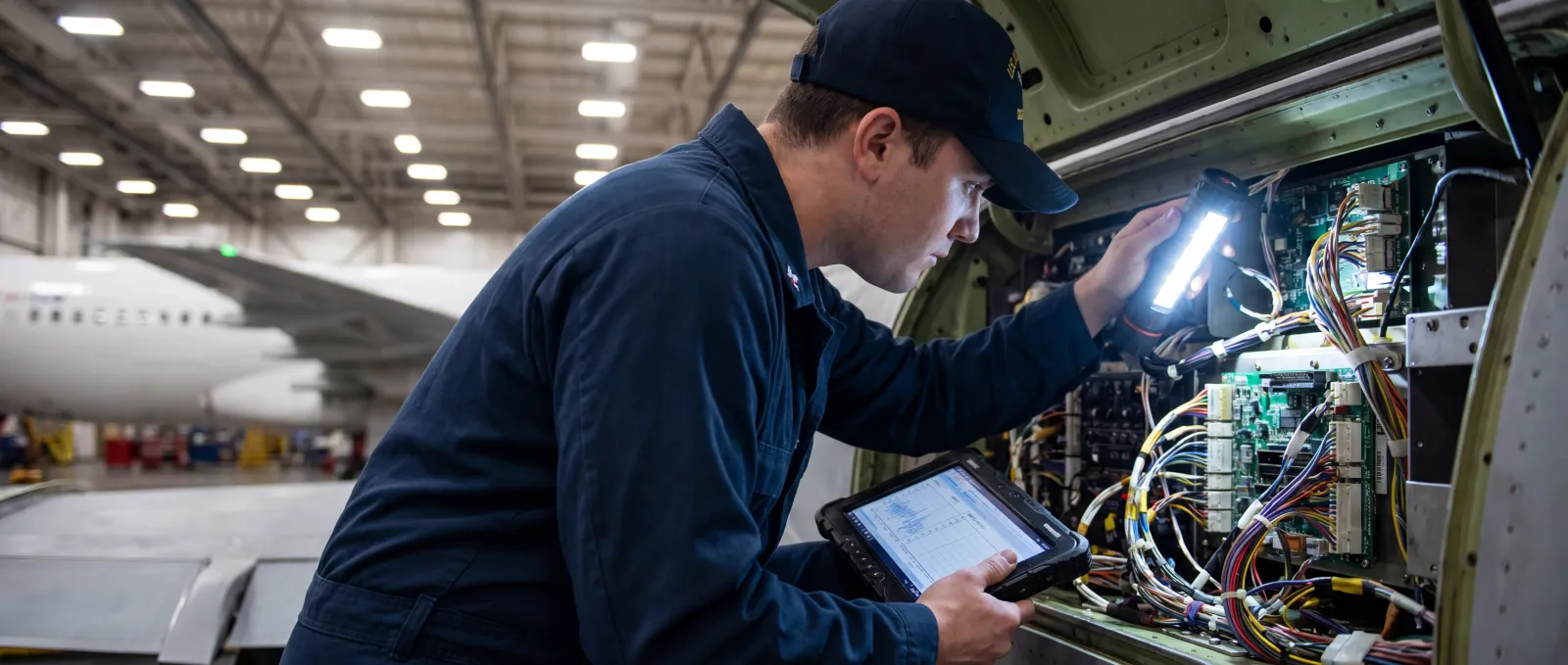
Aerospace technician performing maintenance inspection

Assess early. Verify continuously. Close gaps before they compound.

AmpUp identifies what new hires actually know — and what they don't — from week one, not month six.

Baseline Assessment

Measure incoming competency against your specific procedures and standards. Identify gaps before the new hire reaches the floor.

Structured Simulation

Practice procedures, troubleshooting, and decision-making in realistic scenarios. Build procedural fluency before supervised task performance.

Continuous Verification

Track competency development over time. Know exactly when a new hire is ready for unassisted work — with documentation to prove it.

The ramp is the same length. When you find out changes.

Both rows run across the same 12 to 18 month ramp. The difference is not how long it takes, it is how long you wait to learn whether the person can do the work.

Today

Verified once, at the start

Shadowing and supervised mistakes, competency unmeasured
Onboarding certification

With AmpUp

Verified from week one

BaselineSimulationVerifyVerifyVerifyVerify

Baseline

Measure incoming competency against your procedures before the new hire reaches the floor.

Simulation

Build procedural fluency in realistic scenarios, ahead of supervised task performance.

Continuous verification

Know when someone is ready for unassisted work, with the documentation to prove it.

30%
faster time-to-certification

In deployments across technical aerospace teams, AmpUp has reduced the gap between hire and unassisted task performance by an average of 30%. The improvement comes from earlier gap identification, not additional training hours.

Frequently asked questions

The gap is not in training volume. Classroom instruction covers regulations and theory, but the hangar floor requires procedural memory, contextual judgment, and the ability to perform under time pressure. New hires spend months shadowing experienced technicians and making supervised mistakes to build the fluency that training was supposed to provide.

By moving competency verification earlier in the ramp cycle. A baseline assessment measures incoming competency against your specific procedures before the new hire reaches the floor, structured simulation builds procedural fluency in realistic scenarios, and continuous verification tracks development over time. The improvement comes from earlier gap identification, not additional training.

Continuous verification tracks each person's competency development against your procedures and standards, so readiness is a measured state rather than a calendar milestone, and it comes with documentation to prove it.

In deployments across technical aerospace teams, AmpUp has reduced the gap between hire and unassisted task performance by an average of 30 percent, which shows up as faster time-to-certification.

See what your training actually changed.

Schedule a briefing tailored to your operation and compliance requirements.